Anil Menon, M.D.
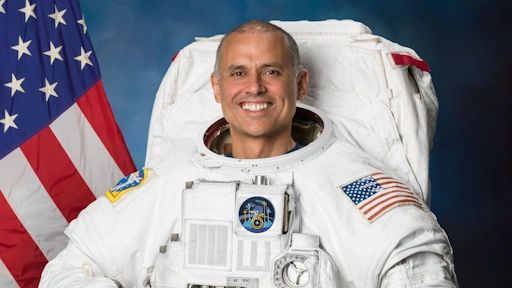
Credit: NASA/James Blair
Anil Menon, M.D. is an emergency medicine physician and flight surgeon, who was selected by NASA to be part of the 2021 Astronaut Candidate Class.
His first flight—Soyuz MS-29—is scheduled for July 14, 2026. He'll be serving as a Flight Engineer for ISS Expedition 75.
To watch the interview with Dr. Anil Menon, click the play button below (or click here to open the video player in a new tab/window).
Click here to display the video player on this page.
To listen to the interview, click the play button below (or click here to open the audio player in a new tab/window).
Mike Reflects
This interview was conducted as part of a "round robin" of virtual interviews with Dr. Menon while he was training in Star City, Russia. The interviews were coordinated through NASA TV, who also live streamed them on YouTube.
The full video of 8 interviews showcases his role and experience from a variety of perspectives, and I recommend watching it if you’re so inclined.
I requested to participate because I find the "known unknowns" of space flight fascinating.
People have been going to space for various distances and durations since 1961. That’s 65 years of human spaceflight.
Some of my earliest interviews were talking to Flight Director Gene Kranz and astronauts Alan Bean and Jim Lovell about what they knew, didn’t know, thought, and experienced when we were first sending people to space and the moon.
Upon reading Dr. Menon’s bio ahead of the interview availability, I was curious to explore what we still needed to learn and how we were going to learn it.
Though I only had a little over 5 minutes, and I hadn’t really covered the medical side of things before (though I hope to do more in the future), I’m quite pleased with how the interview turned out.